Search results for tag #linux
Some of our hot Linux takes including software bloat, ChromeOS being the best set and forget system, touch screen Linux still not being quite there, and Xfce being (nearly) dead to us.
https://linuxafterdark.net/linux-after-dark-episode-133/
Alt...
Linux After Dark artwork

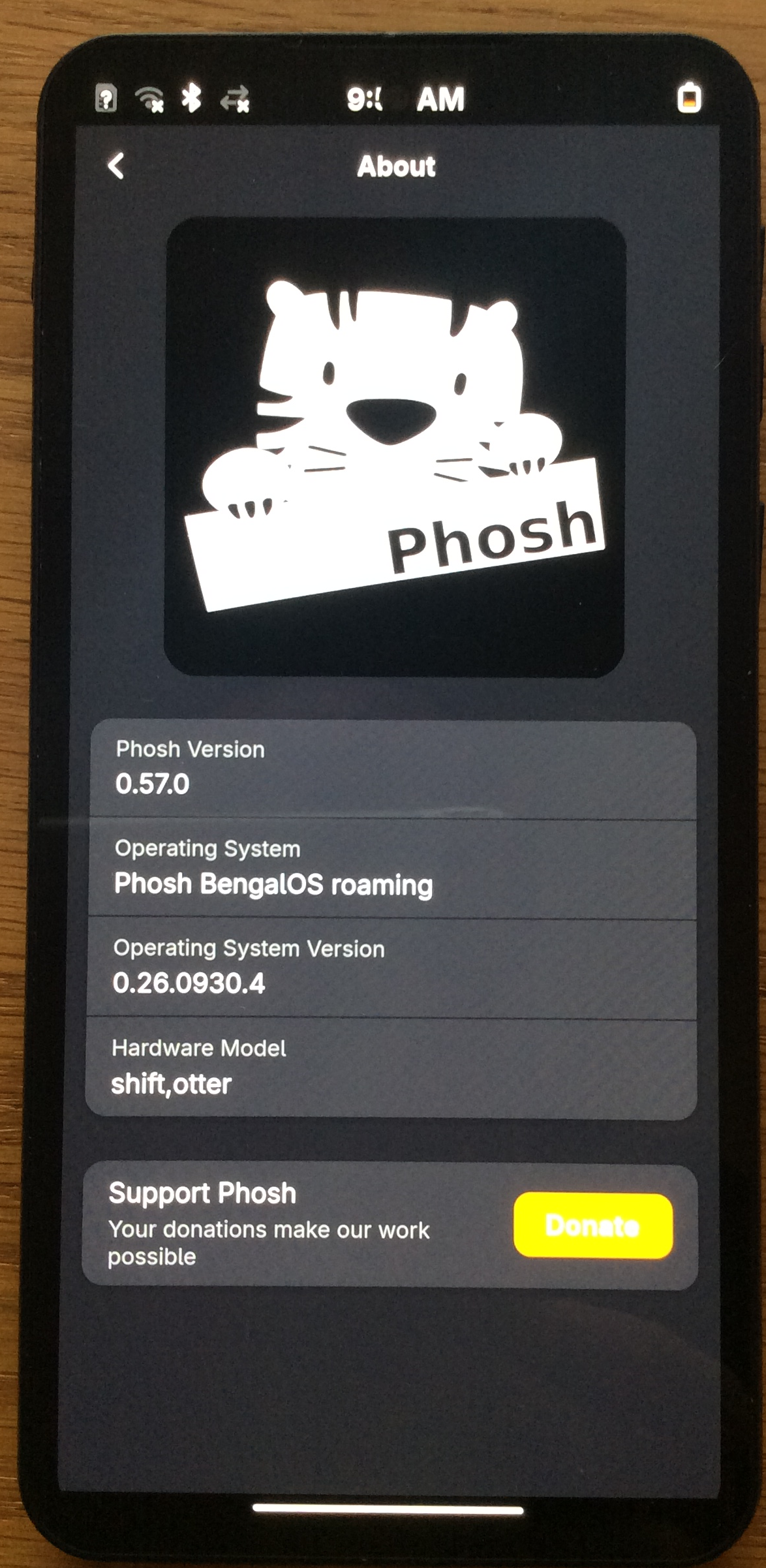
Phosh's BengalOS booting on a SHIFT8. Thanks to the #Linux #sc7280 maintainers for their work!
That's the first device booting on BengalOS that is still available for sale (and will be for some time). There's plenty of stuff missing on the kernel side to make that usable, but it's a start.
#LinuxMobile #Linux #mobile #Phosh #BengalOS
Alt...
A screenshot of a SHIFT8 phone. The mobile settings app is running and the about page says: shift,otter.
# Funding Free / open source software: what can I, personally, do differently?
Almost five years on, and I don't think that much has changed.
I wish that there was an easier way of funding Free software.
Yesterday, as I sat here, using a laptop running on Free software written and maintained by volunteers, to connect, by means of a secure tunnel formed by Free software written and maintained by volunteers, to multiple servers, all running Free software written and maintained by volunteers, to apply patches prepared urgently by volunteers to resolve security vulnerabilities, I felt *incredibly* grateful for every single one of those volunteers, who makes the fact that I could do *any* of this possible.
Thank you, genuinely.
A true legend of computer science leaves us, Fortnite is coming to Linux, Steam is finally moving away from 32-bit, Microsoft Defender comes to the Linux Desktop, Adobe’s flagship apps are cloned by AI as open source, and a quick KDE Korner.
https://latenightlinux.com/late-night-linux-episode-408/
Alt...
Late Night Linux artwork

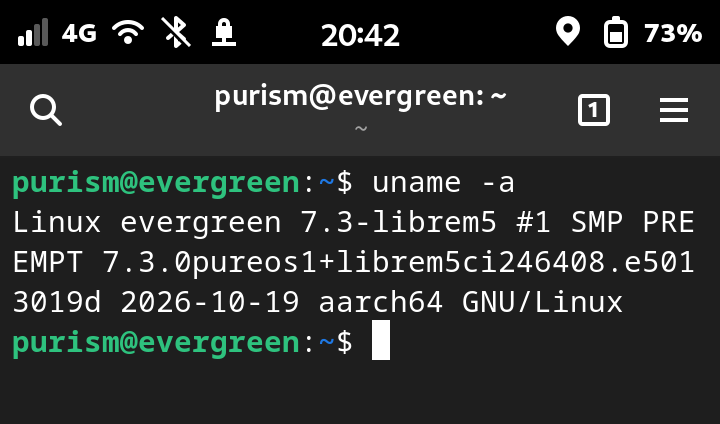
#Linux 7.3 is out. The #Librem5 tree is in a good shape already - it will likely show up in #PureOS soon and be made the default once its LTS status is confirmed.
155 files changed, 36899 insertions(+), 1675 deletions(-)
but excluding a couple of downstream drivers that add a lot of noise:
88 files changed, 3222 insertions(+), 261 deletions(-)
Since the beginning of the year we were able to shed about 1000 line insertions and 150 deletions 🎉
#mobilelinux #linuxmobile #kernel #linuxphone
Alt...
A screenshot showing the upper part of the phone's screen. The phone is running Phosh and there's GNOME Console being displayed. In the terminal, there's the result of "uname -a" command being shown:
Linux evergreen 7.3-librem5 #1 SMP PREEMPT 7.3.0pureos1+librem5ci246408.e5013019d 2026-10-19 aarch64 GNU/Linux

Meine #Krankenkasse hat mich zum Glück noch nicht mit einer #App belästigt. Ich mache da alles mit #Firefox auf #Linux. Sogar ohne #SMS.
When is it time to look for a new software development job? How do you cut through all the other applicants and get your foot in the door? When you do move on, how much notice should you give?
https://linuxdevtime.com/linux-dev-time-episode-161/

Alt...
Linux Dev Time artwork

🐧 Artikelreihe: Der Umstieg von TUXEDO OS auf Debian Testing
Ihr möchtet mehr über TUXEDO OS erfahren? Wir haben unsere bisherigen Artikel für euch zusammengestellt!
🔎 Was interessiert euch besonders: TUXEDO OS für Entwickler oder digitale Souveränität?
Viel Spaß beim Lesen!
👉 https://www.tuxedocomputers.com/de/Infos/News.tuxedo?tuxpage=1&tuxsort=false,true#2296,12591
#TUXEDO #Linux #Debian #OpenSource

Alt...
Schwarzer Kreis mit einem weißen, geometrisch stilisierten X in der Mitte, umgeben von einer breiten roten Pinselspirale, die teilweise überlappt.
@nextcloud #nuraeco is not as polished as #ubtouch or #android however:
Nura= real #linux
Ubuntu & Android = Linux wannabe

Address:
Lecture Theatre G12,
1-19 Torrington Place (University College London),
London,
WC1E 7HN
Time: 6 pm - 7:30 pm on Tuesday 10 November. Admission opens at 5:30 pm.
Registration: required - sign up here.
Thank you to Lars, @arunisaac@snac.systemreboot.net, UCL LUG and UCL itself for calling, organising and hosting this event!
The first step forward 👀
#librem5 #mobilelinux #linuxmobile #linux #shotonlibrem5
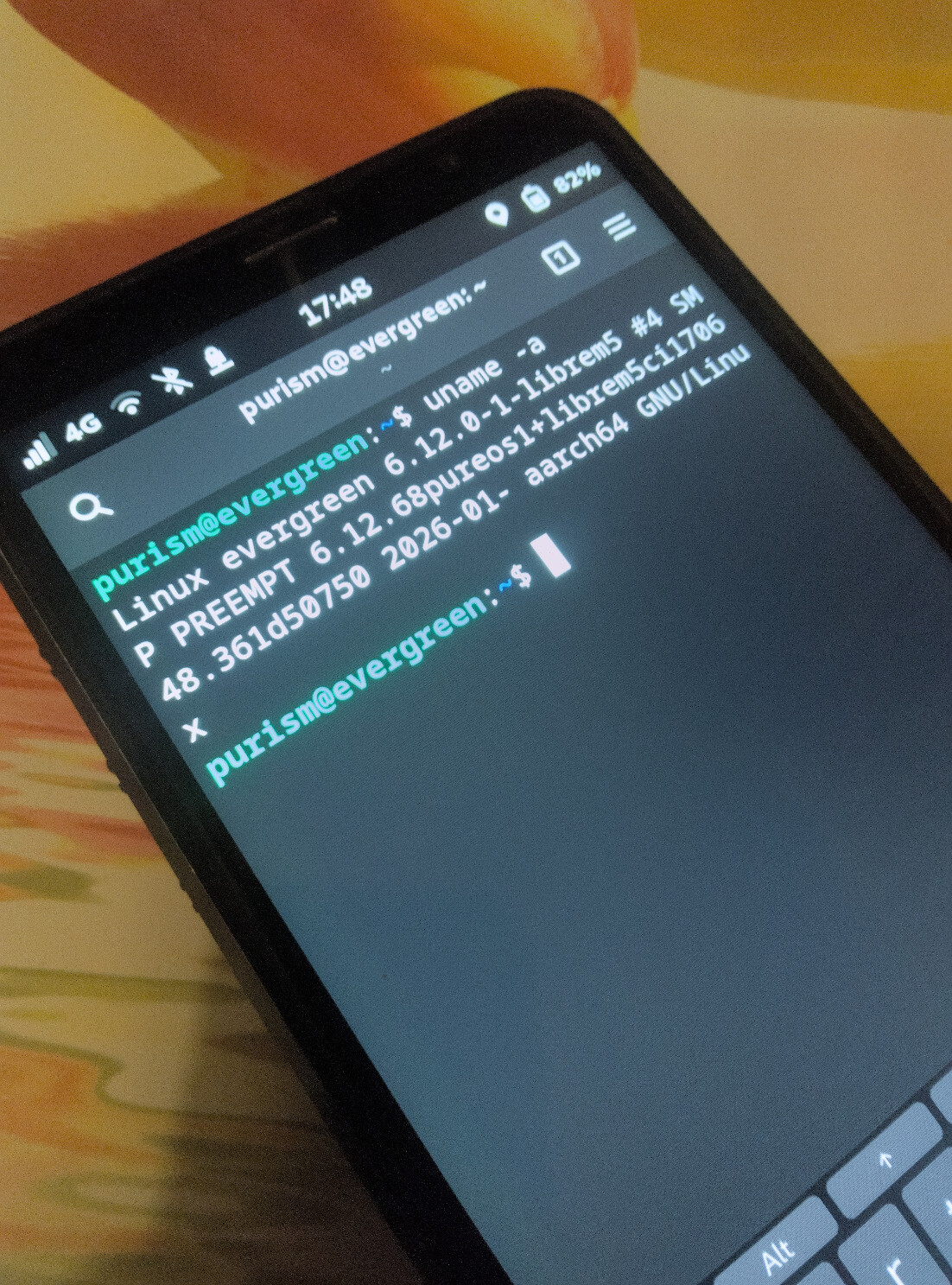
Alt...
A Librem 5 phone displaying a terminal app with the output of "uname -a" command showing that it's running a 6.12.68-based kernel tree.
If a casual chat about #Linux and #FOSS over a curry sounds fun, please come join us! Just reply to me by the end of 21 January so I know numbers for the booking.
Time: 24 Jan, 19:00
Address:
Kings Cross Tandoori
341 Gray’s Inn Road
WC1X 8PX
Hope to see you there, and any questions feel free to ask.